Don't Get Stuck With a BlackBerry on Wheels

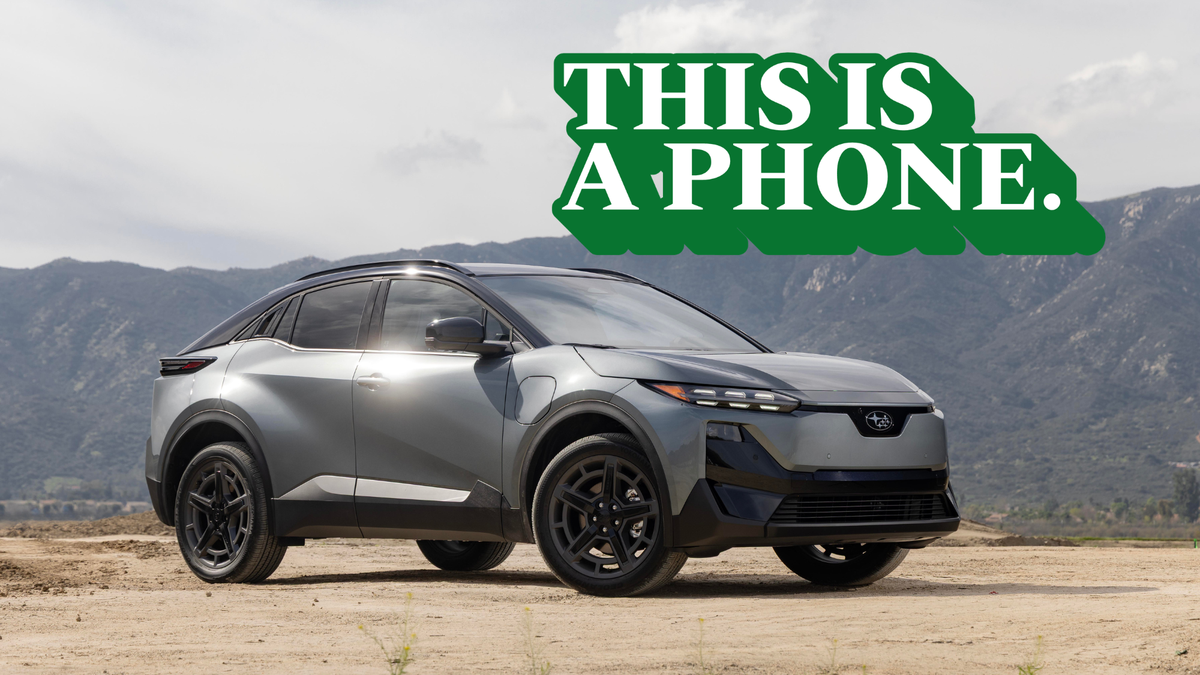
Car journalist Jonny Lieberman likes his Rivian R1T more today than the day he got it. In a video on his YouTube channel posted last year, he walks through why: software updates have added snow, tow, and camping modes, switched on a bed camera that was always there, and, by his account, raised the truck's range from 270 to 285 miles. Physical buttons stay the way they were the day you bought the car. A screen can keep getting better, like a phone with a new operating system.
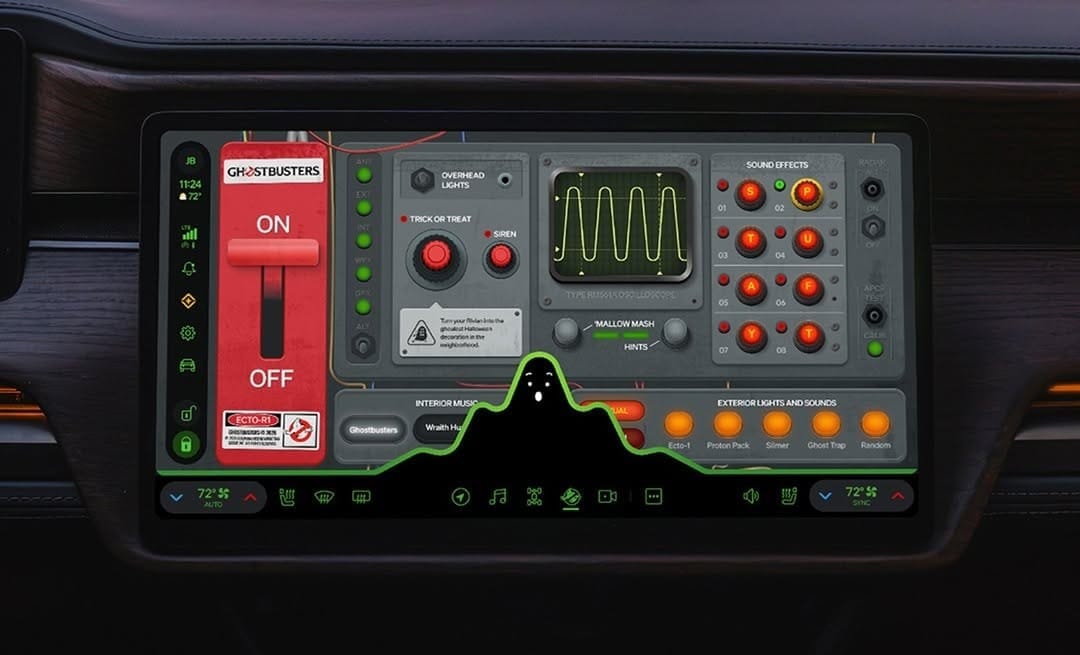
I've seen the fun side of this firsthand. Earlier this month, Rivian pushed a free Ghostbusters-themed Halloween update to every R1 and R2, made with Sony Pictures. One big red on-screen switch sets off themed lights, sounds, and screen graphics. A Trick or Treat mode greets costumed visitors, and a Motion Mode lets the car react when someone walks past. It showed up on my Rivian as a regular software update, and it's been giving my family and friends a lot of joy. A ghost now appears to read and send text messages. It's hilarious. No dealer visit, no new hardware: the car I already own just got more fun.
That's the promise, and it's why software now matters more than hardware. Cars are starting to look and drive alike. Electrification and aerodynamics push every brand toward similar shapes, similar screens, and similar performance numbers. When the hardware converges, software is what's left to compete on: the features, how often it updates, how good the screen is to use, and what's hidden behind a subscription.
So nearly every automaker now wants to own its software, the way Apple owns iOS. Just this week, Subaru announced it's building its own software platform rather than use Toyota's, even though Toyota owns 21% of Subaru (Reuters via Digital Trends).
The catch is that most automakers aren't very good at software, and the ones that have tried have mostly spent a fortune learning that lesson. If that sounds familiar, it should. The phone business ran this exact race 15 years ago, and it's the best guide we have to how this one plays out.
The phone map
If you remember the smartphone wars of the late 2000s, you already understand the car software race. Here's roughly how the automakers line up.
| Phone model | How it works | Who's playing it in cars |
|---|---|---|
| Apple | One company builds the hardware and the software together | Tesla, Rivian, BYD |
| Build the operating system, then license it to others | Google itself, with Android Automotive in Volvo, Polestar, GM, and Renault vehicles; Rivian is effectively playing this role for VW | |
| Samsung | Make great hardware, run someone else's software | VW, which committed up to $5.8 billion to a joint venture with Rivian after its own software unit stalled |
| Nokia | Be the biggest hardware maker, then try to turn your own system into a platform for everyone else | Toyota, which plans to offer its Arene platform to partner brands |
| BlackBerry | Go it alone without the scale to keep up | Subaru, which this week said it will build its own platform rather than use Toyota's; arguably Ford, which scrapped its next-gen electrical architecture after billions in EV and software losses |
GM is a bit of a hybrid. It runs Google's software but pulled CarPlay from its EVs to keep control of the screen, a little like Samsung piling its own apps on top of Android.
The Google model isn't plug-and-play, either. Google supplies the apps and the interface, but the automaker still has to wire that software into everything else in the car, and that's where things tend to break. Volvo delayed EX30 deliveries in early 2024 while it fixed its Android Automotive-based software, a big deal in a car that runs nearly every control through one screen. GM paused Blazer EV sales in late 2023 after owners and reviewers hit blank screens and charging faults, though GM said the problems weren't related to Google built-in. It's the Android phone story all over again: same Google software, very different results depending on who built the hardware.
What phones already taught us
The phone business ran this experiment 15 years ago, and the results were brutal. BlackBerry, Palm, and Microsoft each built their own mobile operating system, and each lost. BlackBerry even had devoted fans. It didn't matter.
The most telling story is Samsung's. Before going all in on Android, Samsung tried its own operating systems, first Bada and then Tizen. Neither caught on in phones. Samsung became the world's biggest Android phone maker partly by giving up on owning the software.
Nokia is the story Toyota should study. It was the world's biggest phone maker, and it tried to turn its own system, Symbian, into a platform other phone makers would share. They left for Android instead. Nokia then bet on Windows Phone, and lost again. Toyota is the world's biggest automaker, and it's now pitching Arene to partners. Subaru, a company Toyota partly owns, just said no thanks.
So here's my take. Right now, the companies that were built around software from day one, Rivian and Tesla, give me the most faith for the long run. Most legacy automakers will end up as BlackBerry, unless they do what Samsung did and stop trying to own the operating system.
Where the analogy breaks (and why it doesn't matter much)
Cars aren't phones. They stay on the road for 12 years or more, and the software that controls braking, steering, and the battery has to pass safety certification. If it fails, the automaker is liable, not Apple or Google. That's a big reason automakers won't just hand over the keys.
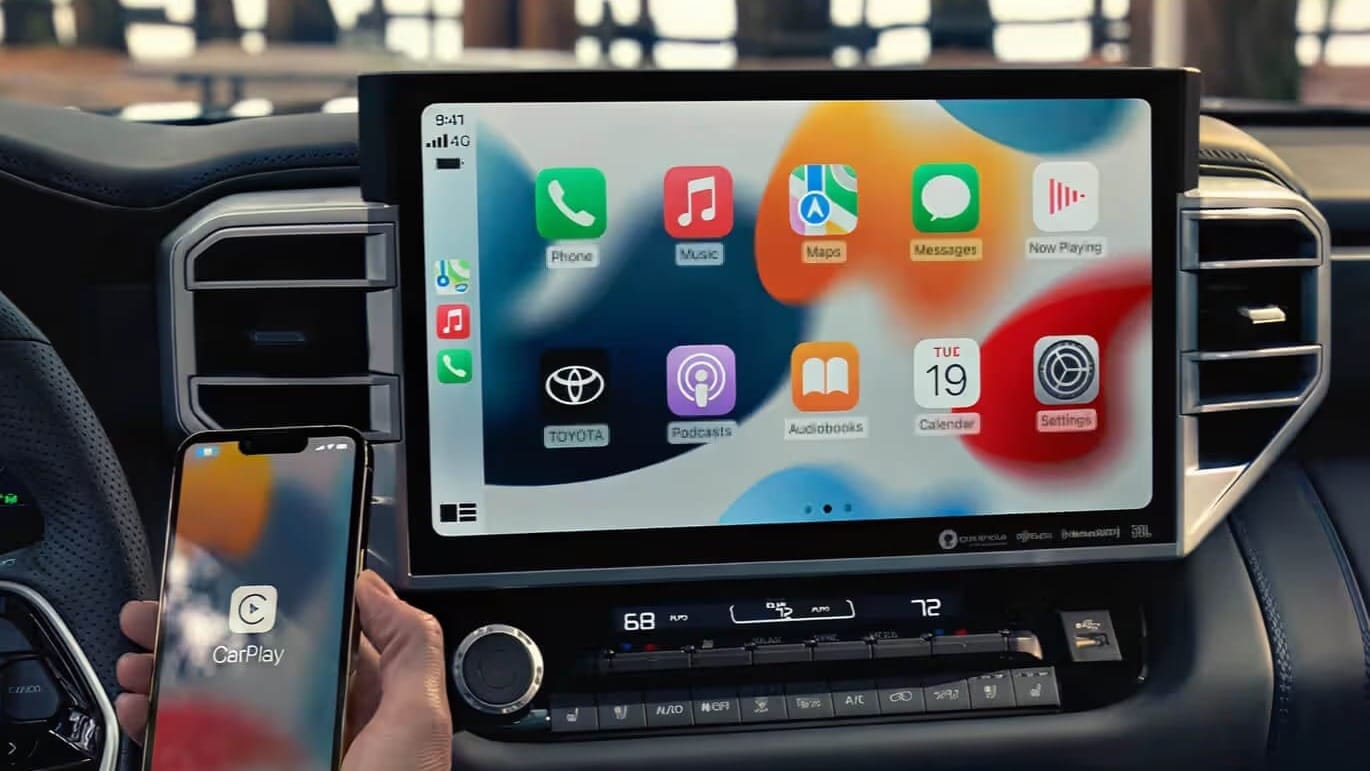
But on the part of the car you actually touch every day, buyers have already picked their platform: the phone. In a McKinsey survey, about a third of car buyers worldwide said a car without CarPlay or Android Auto was a deal-breaker. Asked what they'd do if those systems disappeared from their car, 52% said they'd just use their phone. Only 35% said they'd switch to the automaker's system. Why? Because so many of the systems that come with the car can't touch the basic excellence of their smartphones.
The monthly bill
Here's the part that hits your wallet: automakers don't just want to own your car's software, they want it to be a recurring charge. Subscriptions are one of their stated growth plans.
Drivers are moving the other way. In S&P Global Mobility's connected-car study, the share of drivers willing to pay for connected services fell from 86% in 2024 to 68% in 2025. Cost was the top reason people gave for not using them.
I feel this one personally. In my Rivian, streaming over the car's own connection used to be free. Now many connected features and even "priority" software updates sit behind Connect+, which costs $14.99 a month or $149.99 a year after a 60-day trial. I pay it, because unlike Depeche Mode, I rarely enjoy the silence. My wife thought it was rich for a luxury brand to charge for it. She's not wrong.
What this means for your next car
Software is now part of what you're buying, so shop for it like you would anything else. Here's what I tell my Lanekeep clients.
First, figure out which phone you're buying. It tells you how the software is likely to age, and what to check on the test drive.
- Apple-style (Tesla, Rivian). Software and car were built together, and they keep getting better through updates. If long-term software matters to you, these are the safest bets right now. The trade-offs: no CarPlay or Android Auto, and some features live behind a subscription.
- Google built-in (Volvo, GM). Google Maps and Google Assistant run natively, and they're good, but how well the rest of the car works with them varies by brand, so test both. Phone projection depends on the brand: Volvo offers CarPlay, while most of GM's EVs don't.
- Samsung-style (VW). VW's Rivian-built software doesn't arrive until 2027 in Europe and 2029 in North America. A VW you buy today still runs VW's current software, so judge it on that.
- Nokia or BlackBerry (Toyota, Subaru, Ford, and most other brands building their own). Expect the native software to lag. Make sure CarPlay or Android Auto is there, and plan to lean on it. That's not a dealbreaker; it's how most people already drive.
Then, wherever it lands:
- Test-drive the screen, not just the car. Spend as much time with the touchscreen, the voice assistant, and the phone app as you do on the road. Try the things you'll do every day: start navigation, play your music, change the climate, call someone.
- Plug in your phone. Confirm CarPlay or Android Auto works, and see how it shares the screen with the car's own controls. Some brands, including Tesla, Rivian, and most of GM's EVs, don't offer it at all.
- Ask what's free and what isn't. Find out which features need a subscription, how long the free trial lasts, and what it costs after. Connected services, driver assistance, and even streaming can end up on a monthly bill.
- Look at the update track record. Search for owner reports on how often the brand pushes updates, and whether those updates have fixed things or broken them. A brand's history tells you more than its promises.
- Ask how long the software will be supported. Your phone maker tells you how many years of updates you'll get. No automaker states how many years of feature updates your car will get. Ask anyway. The answer, or the lack of one, is useful information, especially if you plan to keep the car a long time or care about resale value.
The exception: cars built for driving
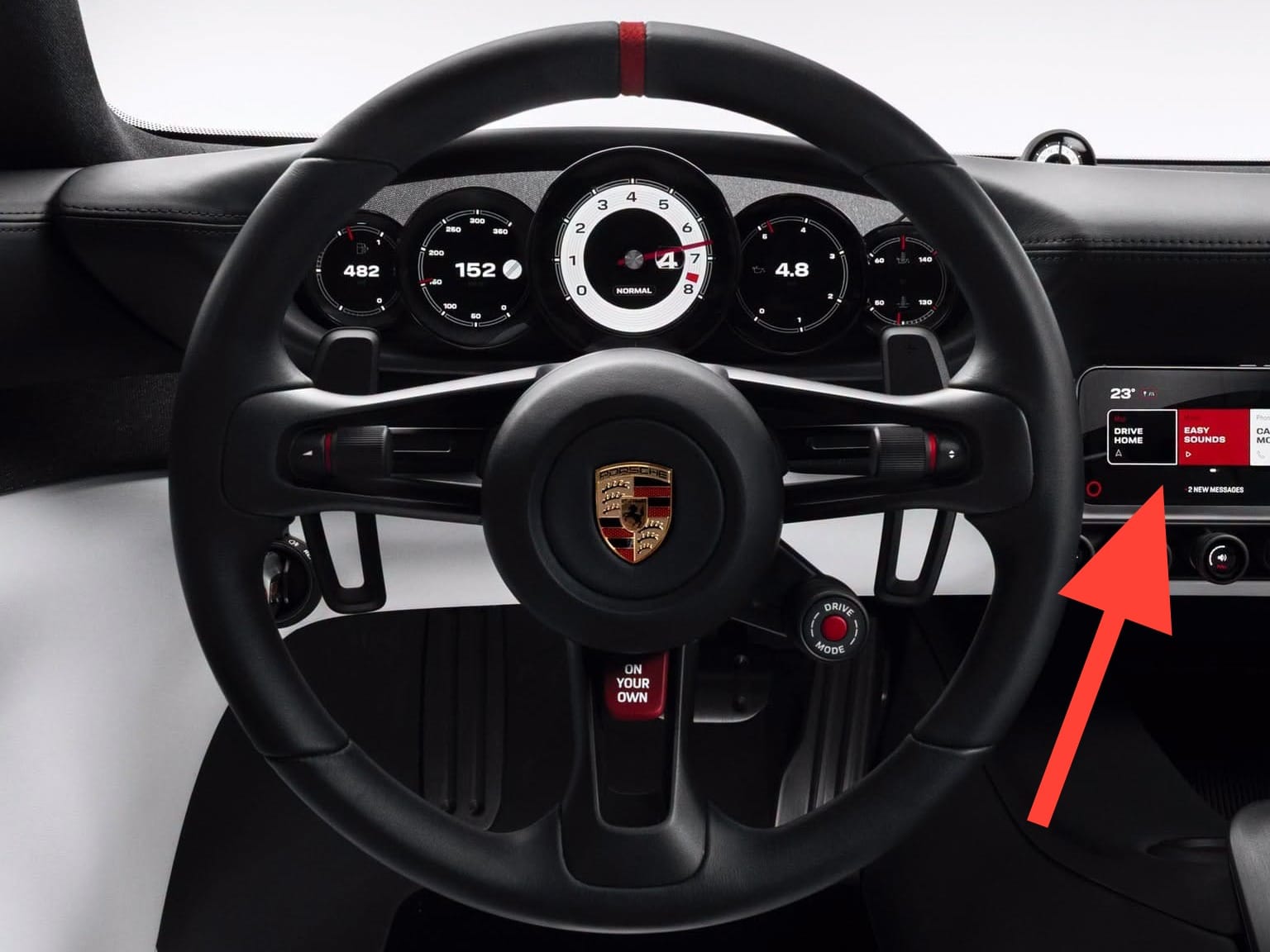
There's one group of cars where I expect less software, not more: enthusiast cars. Last week, Porsche unveiled its Mission S concept, a preview of a new mid-engine supercar that will sit above the 911. It has no center touchscreen. Instead, a retractable MagSafe mount holds your phone, which runs navigation and media through the My Porsche app.
It's only a concept, and Porsche hasn't said what the production car will look like inside. But the idea makes sense. When the car itself is the experience, the phone is enough.
For everything else, the software is quickly becoming the car. Shop accordingly.