Automakers Trained Us to Overbuy. It's Time to Right-Size.


Car shopping in America is miserable right now, and the numbers explain why. The average new car sells for just over $50,000. Prices are up roughly 40% since 2018. The average monthly payment just hit a record $787, and more than one in five buyers now pays over $1,000 a month, often on a seven-year loan.
Here's the good news: you probably don't need that much car. The right-sized options are quietly some of the best values on the lot, and a lot of them are electric.
How we got here
This didn't happen by accident. Over the last decade, Detroit killed off its small cars (Spark, Sonic, Cruze, Fiesta, Focus) and filled showrooms with trucks and SUVs, then marketed those chunky boy vehicles as emblematic of being American, sigils of freedom. The reason is margin. Core profit margins on large SUVs and pickups can exceed 20%, former auto executives told Reuters. GM now makes about $4,200 in operating profit per vehicle in North America, up from $3,000 in 2018, while selling fewer of them.
Jalopnik said the quiet part out loud: "Detroit doesn't need the average American to buy a car; better to sell affluent households their second S.U.V."
Now the bill is coming due. For a while, subsidized cheap gas made a 5,600-lb pickup feel painless to own. Not anymore: the national average is $4.36 a gallon, up from $3.12 a year ago. That's a regular reckoning at the pump, and on your credit card statement. Buyers are noticing. Cox Automotive estimated that Ford's sales would fall 8.8% and GM's 6.2% through the third quarter, leaving the Detroit Three at an estimated all-time-low 36% market share. Households earning under $100,000, which is most of the country, have gone from more than half of new-car buyers to about a third.
Don't wait for a rescue. The $50,000 average isn't a mistake automakers plan to fix. It's the business model. And Washington just cut fuel-economy standards by nearly a third, to 34.9 mpg for model year 2031, down from the 50.4 mpg the previous rule required. That's less regulatory pressure to build smaller, efficient cars. If you want a right-sized car, you'll have to go get one.
The right-sized options are real
A Kia EV3 starts at $29,890. The reborn Chevy Bolt is back at $28,995 with 262 miles of range. The new Nissan Leaf lands in the same neighborhood. Stretch your budget a little and you get a base Hyundai Ioniq 5 at $35,000 or an entry-level Tesla Model 3 at $38,380.
Any of them easily handles everyday driving: 95% of car trips are 30 miles or less, according to federal travel data. And they do it at a price the average new truck can't touch. The savings keep going after you buy. Charging at home runs about 5 cents a mile versus 12 cents for gas. For the average driver, that's roughly $1,000 a year back in your pocket, before you count the oil changes you're skipping. With gas up 40% in a year, that gap is only getting wider.
Three honest caveats
Electric doesn't automatically mean right-sized. A 9,000-lb Hummer EV is the same overbuying trap with a battery instead of a V8. Right-size first, electrify second.
The fuel math assumes home charging. If you'd live off public fast chargers, the cost runs roughly even with gas. Charging where you sleep (or work) makes the savings real.
The cheap end of the market is thin. Slate's $24,950 truck is real, but it comes from an unproven startup building its first car. Ford's $28,350 Fathom has a name and a price, but you can't buy one until late 2027. And the Bolt just came back but GM plans to phase it out again.
Meanwhile, in Europe...
Europe shows what happens when affordable EVs actually exist. EV sales there hit 1.64 million through August, up 45% and good for 22% of the market. Chinese brands now hold about 12% of European sales, up from 6–7% a year earlier, on the strength of genuinely good, cheap EVs like BYD's Dolphin Surf, which starts around $25,000 in the UK. As one Chinese auto policy researcher put it, "Chinese NEVs [new energy vehicles] have offered the right solutions at the right time in Europe over the past few years, where high energy prices and rising inflation have made consumers much more sensitive to the total cost of vehicle ownership."
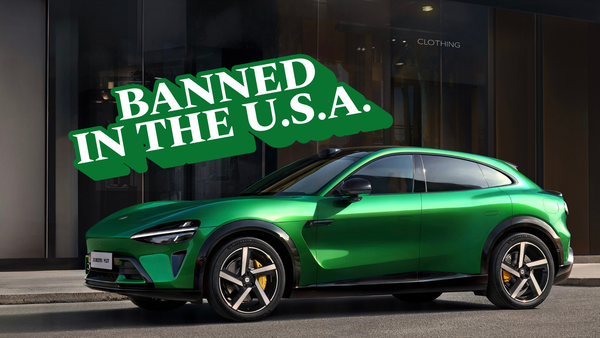
Americans can't buy any of them. (100% tariffs will do that.)
Even familiar brands are keeping their best small cars over there. Hyundai's new Ioniq 3, an electric hatchback that costs about $25,000 after the UK's EV grant, like our old tax credit, is launching in Europe and isn't coming here. We do get its platform sibling, the EV3. The affordable EV exists. Europe just wants small cars in a way America hasn't.
Why? Start with what Europeans pay to fill up. Gas in Germany ran about €1.90 a liter this summer, roughly $8 a gallon, nearly double what Americans pay . At that price, no ad campaign can make a 5,600-lb pickup feel like freedom. It feels like a burden. Cheap gas is what makes America's truck-and-SUV business work, and now we're finding out what happens when it goes away.
Your move
That's the real asterisk, and it puts the decision on you. Every EV3, Bolt, and base Model 3 that leaves a lot tells automakers there's demand for cars normal people can afford. Detroit spent a decade teaching us to buy more car than we need, and cheap gas turned the lesson into an addiction.
The question is whether we'll buy right-sized, or keep convincing automakers the $90,000 pickup was our idea.
This is what we do at Lanekeep: cut through the noise so you buy the right car, not the most car. Book a free consultation at lanekeep.com.