Do EV Batteries Need to Be Replaced? Here's What 1 Billion Miles of Data Says

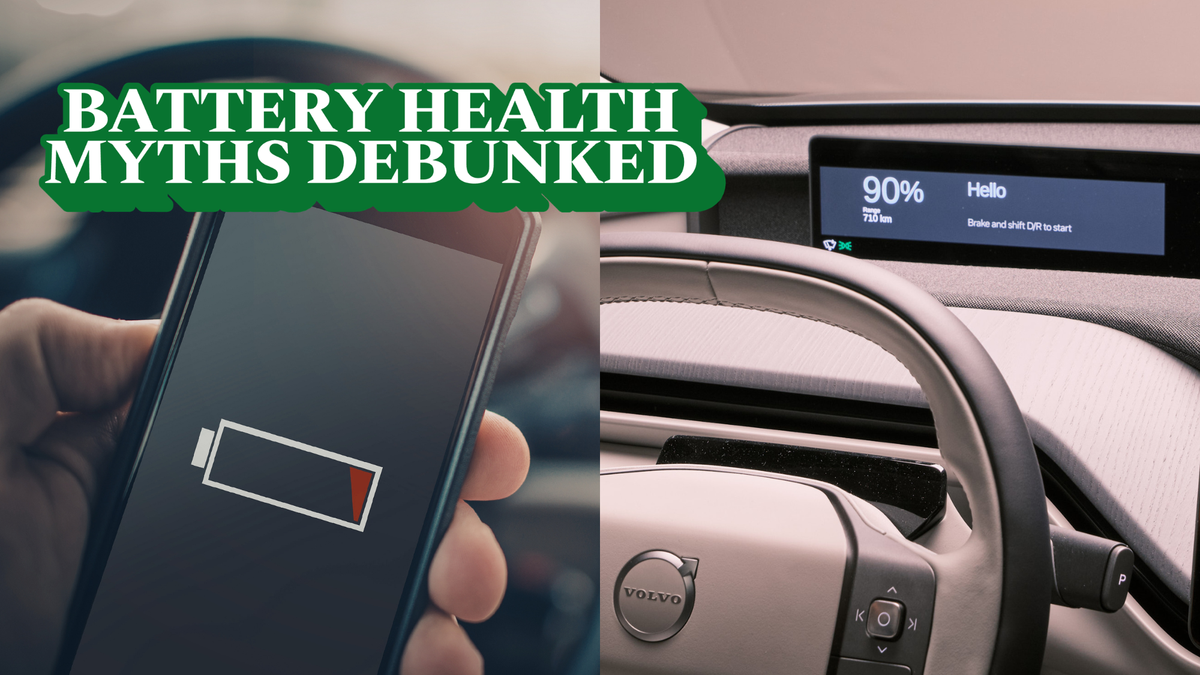
Tell me if you've been in this scenario before: you shell out the cash for a brand new iPhone only to watch your battery health drop to 79% in 18 months. Then you receive the dreaded "your battery may need service" notification. Your options? Go to some shady shop for a third-party battery replacement? Cave and shell out full price for a brand new phone?
That experience is visceral now, hard-coded. So when someone mentions an expensive battery-powered vehicle, the same alarm goes off for many potential buyers.
Case in point: This comment appeared on Threads in March and got thousands of views and over a hundred replies:
"If I buy an EV I have to throw it out after the battery runs out after 7 years. Once the warranty has run out it's worth nothing. Replacing the battery is out of everyone's budget."
It's a reasonable fear, but ultimately pointed at the wrong product.
Your phone battery was designed by a company that profits when you upgrade. Your EV battery was designed by a company that eats the cost if it fails — through warranty claims, recalls, and PR damage that can sink a brand, or a specific model.
The replies to that Threads post told the story. One EV owner responded: "Just parked my 9 year old EV in my driveway, with its original [high voltage] battery which is at 93% of its original capacity. It's likely to outlive me."
Another: "Oh shit...I was supposed to throw away my EV's battery 4 years ago?!?!"
If you're one of many folks considering their next purchase who worry their EV will end up like their smartphone, don't worry — thankfully, the data tells a very different story.
What the data actually says
Recurrent, a company that tracks real-world battery health across tens of thousands of EVs, recently crossed one billion miles of data from their driver community. Here's what they found.
Battery replacements are exceedingly rare. Across all years and models, outside of major recalls, under 4% of batteries have needed replacement — including in cars that are 10+ years old. For first-generation EVs from 2011–2016, the replacement rate is around 8.5%. For second-generation EVs from 2017–2021, it drops to 2%.
For modern EVs from 2022 onwards, it's 0.3%. That's the sweet spot for used EVs right now.
Another commenter on Threads made a more technically sophisticated version of the argument — that battery warranties cover 8 years or 100,000 miles, which means manufacturers are essentially designing them to fail at that point. That's a misread. The warranty isn't a countdown clock, but rather a floor — a guarantee that the battery will retain at least 70% of its original capacity for that period. The vast majority of batteries exceed it.
The thing about the "7 years" assumption
Here's where it gets more interesting. John Voelcker has been covering EVs since the first Nissan Leaf rolled off the line in 2011. During a recent talk for the International Motor Press Association, he offered an insight that prompted me to write this post in the first place:
"The age of the battery may actually be as important, possibly more important, than the number of miles on the car. So if you're looking for a used EV, a 60,000-mile car that's two model years old might just be a better bet than a five or six year old EV, even if it only has 25,000 miles on it."
Counterintuitive, at first glance, but it matters for anyone shopping used right now.
The four things that actually matter for EV battery health
Battery degradation has four main causes, and only one of them shows up on the odometer.
Heat is the biggest villain. Excess heat accelerates the chemical reactions that degrade battery cells. Most modern EVs have strong thermal management systems, but it's worth verifying in older models, particularly those that spent years in hot climates.
Extreme states of charge are second. Regularly charging to 100% or running down to 0% stresses the cells over time. The sweet spot for the most common battery chemistry, NMC, is staying between 20–80%, and owners who know this tend to have healthier batteries. A smaller number of cars in the US have LFP batteries, which can be more regularly charged to 100% — it's important to know what you're buying.
Fast charging is third. DC fast charging creates heat and, over time, internal scarring that reduces both range and charging speed. Occasional fast charging — road trips, for instance — is fine. A daily habit of it isn't. This is one of the reasons why, at Lanekeep, we think the best qualifier for EV ownership is being able to charge where you sleep on a Level 2 charger, rather than depending on public fast charging.
And fourth — the one that explains Voelcker's point — is time itself. Batteries age whether they're being used or not. It's called calendar aging, and it's inevitable. A 2018 EV with 25,000 miles on it has still had six years of calendar aging. The chemistry doesn't care that it was parked. That said, data from independent sources like Recurrent reinforces the idea that EV batteries are a good long-term bet, even the older ones.
The number you actually need to look at
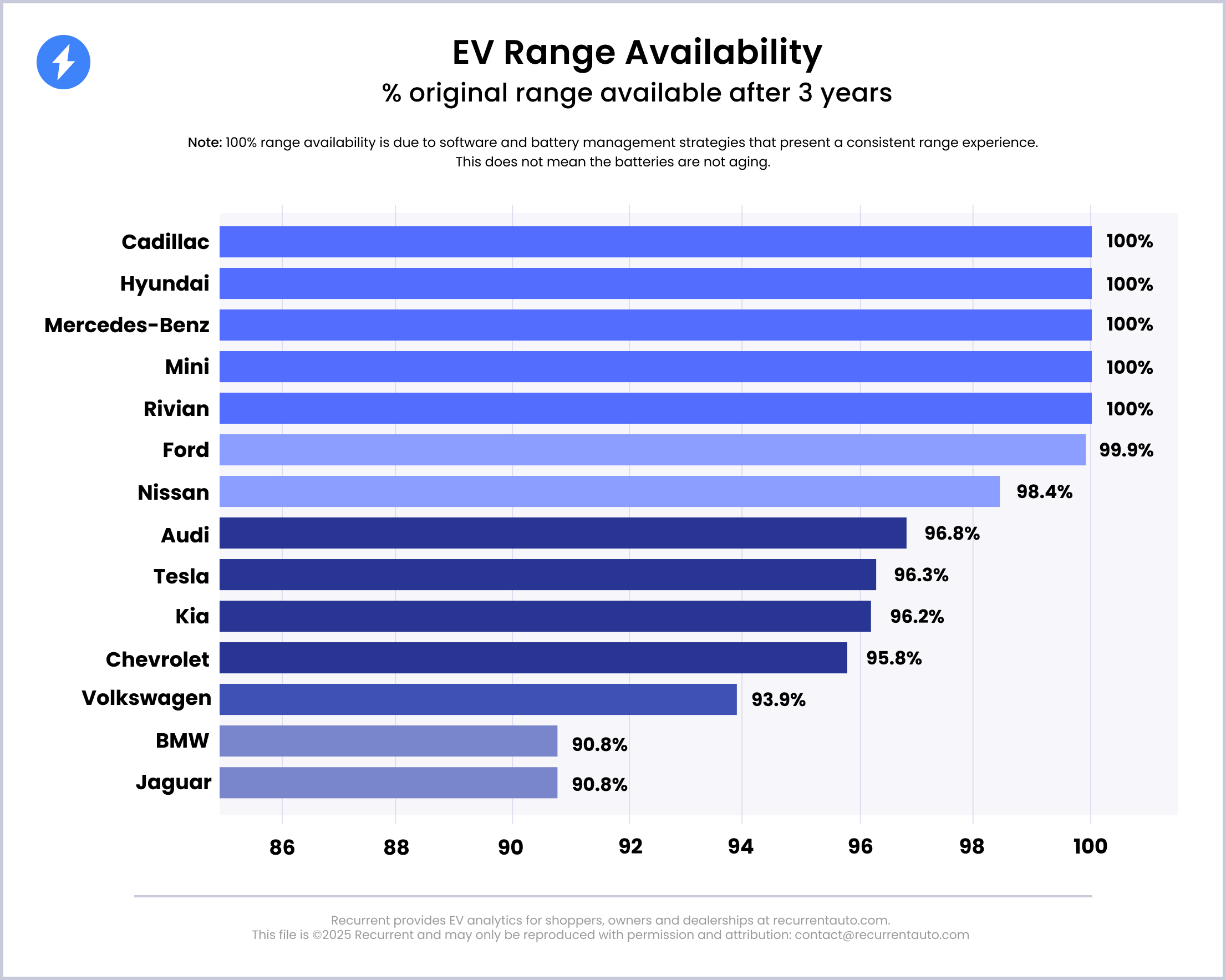
One more wrinkle worth knowing. Range readouts on the dash can be misleading, because some automakers use software updates to maintain consistent-looking numbers even as the underlying battery ages. The display says 280 miles. The battery may quietly be holding less than it was. Manufacturers like GM, Ford, Hyundai, and Rivian manage range this way — it's not deceptive exactly, but it does mean the dashboard number isn't a direct read on battery health.
The practical takeaway: don't just look at the odometer, and don't just look at the range display. Your best bet is to connect the car to a service like Recurrent — enter the VIN and start to get a clearer picture, like Carfax for battery health. As a new R1S owner myself, I've also been using a tool called Rivian Roamer, which goes even deeper on vehicle health for those in the Rivian ecosystem.
Used EVs represent some of the best value in the market right now. Getting that value just requires asking better questions than the ones floating around Threads.
This is what we do at Lanekeep — cut through the noise so you can buy with confidence. Book a free consultation at lanekeep.com.